The Ngorongoro Conservation Area (NCAA) is an expansive and protected region located in northern Tanzania, celebrated for its rich biodiversity and stunning landscapes. Recognized by UNESCO as a World Heritage Site, the NCAA encompasses a variety of habitats, including lush woodlands, expansive lakes, marshy swamps, rolling grasslands, and dense forests. This ecological diversity supports a vibrant array of wildlife and is of significant archaeological importance, as many researchers believe it to be one of the cradles of humanity. Notable archaeological sites within the area include the renowned Olduvai Gorge and Laetoli, where important hominid fossils and ancient footprints, respectively, have been discovered, providing insights into early human life.
One of the most remarkable features of the Ngorongoro Conservation Area is the Ngorongoro Crater, which is the largest intact volcanic caldera in the world. Covering an impressive area of approximately 260 square kilometers (100 square miles), the crater boasts a diameter of about 19 kilometers (12 miles) and its towering walls rise to more than 610 meters (2,000 feet) above the crater floor. This unique geological formation creates a breathtaking landscape that supports a rich ecosystem.
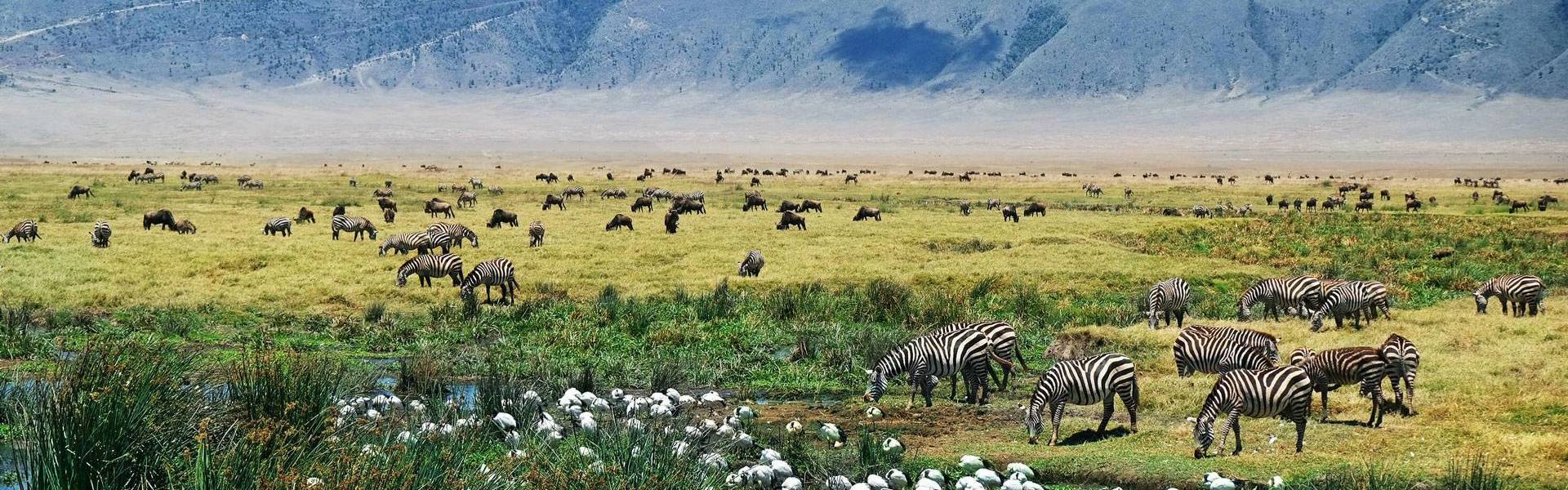
The Ngorongoro Conservation Area is home to an estimated 30,000 animals, representing a diverse range of species. Among these are endangered black rhinos, gnu (wildebeests), plains zebras, and gazelles, all of which roam the open grasslands and woodlands. The area is also a refuge for predators, including lions, hyenas, leopards, and cheetahs, which thrive in its varied habitats. Birdwatchers are attracted to the region as well, with over 400 bird species residing here, including striking flamingos, vibrant superb starlings, and the fascinating silvery-cheeked hornbills, alongside the colorful bronze and tacazze sunbirds.
In addition to its wildlife, the Ngorongoro Conservation Area is home to an indigenous population of over 40,000 Maasai people. The Maasai have a unique cultural heritage and maintain their traditional way of life in the area, being allowed to graze their livestock freely across the diverse landscapes. However, agriculture is not permitted within the conservation area, which helps preserve the ecological balance of the region. It is interesting to note that the Ngorongoro Conservation Area was initially part of the larger Serengeti National Park when it was established in 1951, but it was designated as a separate conservation area in 1959, reflecting its unique ecological and cultural significance.