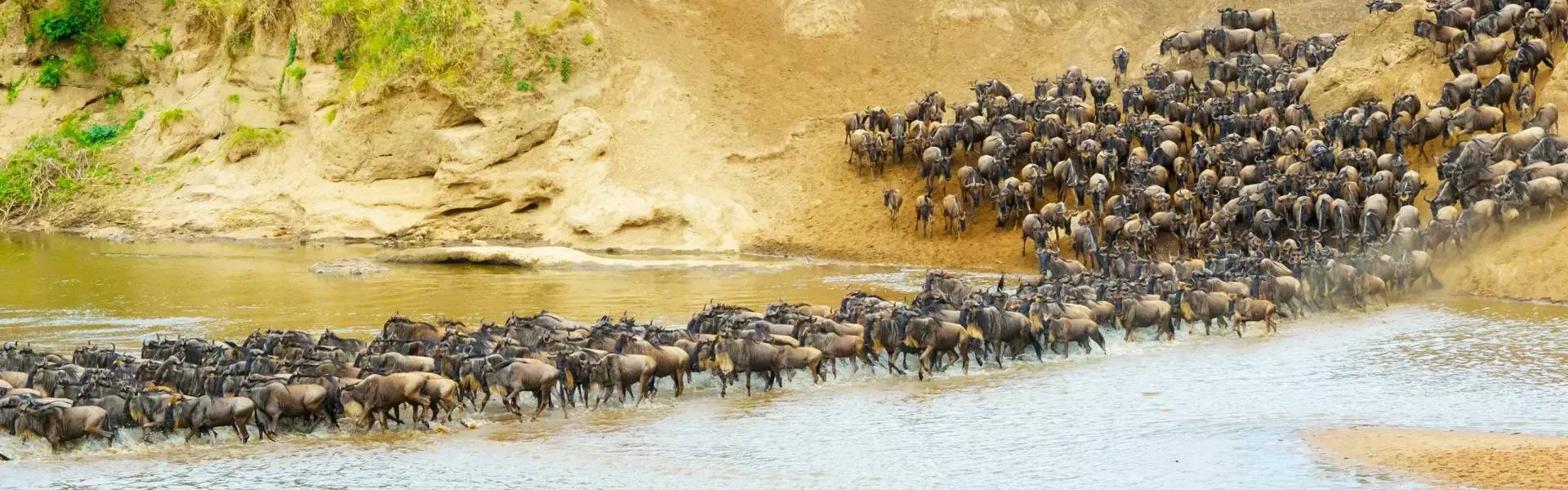
Serengeti National Park, established in 1951, is Tanzania's oldest and most renowned national park, recognized as a UNESCO World Heritage Site for its exceptional natural beauty and diverse ecosystems. It is most famous for the Great Migration, a spectacular annual event during which millions of wildebeests, zebras, and gazelles embark on a remarkable journey. This migration occurs between December and July as these animals move north from their breeding grounds in the southern plains in search of fresh grazing pastures. During their trek, some animals bravely cross the treacherous waters of the Grumeti River, while others travel northeast towards the scenic Lobo Hills, navigating various challenges along the way.
The Serengeti is also home to an impressive population of large mammals, boasting over 2,500 lions, which rank among the highest densities of lions in Africa. In addition to these iconic predators, the park is a haven for diverse wildlife, including leopards, elephants, rhinoceroses, and cheetahs. Birdwatchers will find delight in the park as it houses more than 518 bird species. Some of these birds, such as the European bee-eater and various waterfowl, migrate from Europe during the winter months, enriching the avian diversity of the region.
The park is strategically divided into three distinct areas, each offering unique landscapes and wildlife experiences:
1. Southern and Central Seronera Valley: This area is characterized by expansive savannah ecosystems interspersed with acacia trees, providing ideal habitats for a multitude of wildlife. The Seronera Valley is a hotspot for wildlife viewing, especially during the calving season when many animals give birth to their young, attracting predators looking for easy prey.
2. Western Corridor: Bordered by the Grumeti River, the western corridor features more forested areas and denser vegetation compared to the open savannah of the southern region. The river itself is a vital resource, supporting a variety of wildlife and drawing herds during the migration, particularly when they encounter obstacles at the riverbanks.
3. Northern Lobo Area: This section of the Serengeti is the least visited, offering a more remote and serene experience for those seeking solitude in nature. The Lobo area features rolling hills and a diverse array of flora and fauna, including migratory animals that travel between the Serengeti and Kenya’s Masai Mara Reserve.
Overall, Serengeti National Park is not just a wildlife sanctuary but a dynamic ecosystem that showcases the intricate relationships between species and their environment, making it a must-visit destination for nature lovers and adventure seekers alike.